
I've been rebuilding this old home-entertainment web-server that I built almost 10 years ago. I originally did it on a windows machine, and I just recently started trying to resurrect it under linux. I had the whole thing backed up on an external USB 1TB drive. Pulled the HDD out of the enclosure, and put it in the new server.
Problem #1: USB drive is NTFS. Linux can handle NTFS, but permissions get screwy and there's some overhead that slows down disk access. So I figure I should back it up, reformat it ext4, restore it, etc. And so long as I'm doing all that, may as well do it proper. Create an LVG, move /var, /opt, /home, and /usr each into their own LVs.
Problem #2: (arguably a bigger problem) I wrote the old server. No, seriously, re-read that, because I really do mean that one of the biggest problems with it is that it was written by me. I didn't write the server daemon itself, of course, but I designed the MySQL database, I wrote the PHP to do the queries and dynamically generate the pages, etc, etc... This can be subdivided into multiple problems. For one, it was PHP4. PHP4 has long since been fed to the dogs, and for many reasons besides just the dogs were hungry. For another, I didn't speak PHP... I was just teaching myself as I was writing it. With PHP4. So yeah. Sloppy coding from a total novice using a problematic language.
Guess how I tackled the task of trying to bring it all back to life?
Screw it, I put WinXP in a VM, loaded the old server, took screenshots of the interface so I had pictures to remind me of the look I wanted, and then...
I started writing the whole thing over from the ground up. Completely new database design (the original one was... Uuuumm... [insert-every-disapproving-adjective-simon-cowell-ever-used-on-american-idol] to keep the tables more manageable and speed up queries. Caching. This server will never have any need for caching, but damnit, I'm going to write those routines anyway.)
The frontend is about 85% complete. Backend probably around 65%. Depends on how you chew it, I factor... Backend is fully functional, which would put it at 99 or 100, but what with taking my re-design ideas into account, I have to honestly step that back. Backend is great "as-is", but "as-is" just isn't.
Still tossing ideas around in my head on how to structure the SQL database.
So let's talk about solving problem #1......
The last part, where I thunk (yes, I still insist 'thunk' is valid as a past-tense of 'think'. I know the word 'thought' exists, but sometimes, in retrospect, your rear-view gets clearer, and some 'thunks' don't legitimately qualify as 'thoughts'. After much discussion, I actually got my English professor to agree that our language needs a distinct word like 'thunk'. It can just be a homonym of the other onomatopoeia 'thunk')
OK... I'm not a COMPLETE idiot [fake edit: yes I am], I realize that I can't make the kinds of modifications to a live system with active disks. But that's cool, because I've got this thumbdrive that I made bootable with a basic command-line-only-runlevel-1.
I boot from the bare-bones thumb-drive, delete the NTFS partition, and start trying to create the logical volumes.
Guess what again?
Ubuntu by default doesn't have support for LVM.
No sweat, sudo apt-get install lvm2
Then:
$ sudo pvcreate /dev/sdb1
$ sudo vgcreate foxvg /dev/sdb1
$ sudo lvcreate -L 256G -n lvvar foxvg
$ sudo mkfs.ext4 /dev/mapper/foxvg-lvvar
etc, etc, etc.....
Remember how I said I booted from a LiveUSB? I did that for a reason.....
The drive normally used isn't active. It's probably mostly safe to copy var from an active drive if you drop to runlevel 1, but me? No. I'm just a little too cautious maybe. I don't want that drive in use at all.
I copy /var/. to the lvvar LV:
# mkdir -p /media/lvs/myvardir
# mount /dev/foxvg/lvvar /media/lvs/myvardir
# cd /media/lvs/myvardir
# cp -aRP /var/. .
I rename the old /var directory:
mv /var /var.wtf
I edit the /etc/fstab to add:
/dev/foxvg/lvvar /var/ default 0 1
I reboot, and....
....
......
Totally dead system.
Anyone care to hazard why how or wtf?
[edit:]
Remember again how I said I booted from a LiveUSB?
And remember how I mentioned that ubuntu doesn't support LVMs by default?
And I had to install lvm2?
Yeah... That worked out great.... But only for that liveboot session. Active load still didn't have support.
sudo apt-get install lvm2
sudo shutdown -r now
Everything is shiny.
[edit:]
I have no idea how my plymouth splash fixed itself while I was doing this, but I'm not going to argue with it.
Friday, November 8, 20134:11 PM
Wednesday, June 19, 201312:23 PM
What was that?
[A spaceship has just landed on earth. An extraterrestrial robot steps out of the spaceship...]
"I come in peace", it said, adding after a long moment of further grinding, "Take me to your Lizard."
Ford Prefect, of course, had an explanation for this, as he sat with Arthur and watched the nonstop frenetic news reports on television, none of which had anything to say other than to record that the thing had done this amount of damage which was valued at that amount of billions of pounds and had killed this totally other number of people, and then say it again, because the robot was doing nothing more than standing there, swaying very slightly, and emitting short incomprehensible error messages.
"It comes from a very ancient democracy, you see..."
"You mean, it comes from a world of lizards?"
"No," said Ford, who by this time was a little more rational and coherent than he had been, having finally had the coffee forced down him, "Nothing so simple. Nothing anything like so straightforward. On its world, the people are people. The leaders are lizards. The people hate the lizards and the lizards rule the people."
"Odd," said Arthur, "I thought you said it was a democracy."
"I did," said ford. "It is."
"So," said Arthur, hoping he wasn't sounding ridiculously obtuse, "Why don't the people get rid of the lizards?"
"It honestly doesn't occur to them," said Ford. "They've all got the vote, so they all pretty much assume that the government they've voted in more or less approximates to the government they want."
"You mean they actually vote for the lizards?"
"Oh yes," said Ford with a shrug, "Of course."
"But," said Arthur, going for the big one again, "Why?"
"Because if they didn't vote for a lizard," said Ford, "The wrong lizard might get in. Got any gin?"
"What?"
"I said," said Ford, with an increasing air of urgency creeping into his voice, "Have you got any gin?"
"I'll look. Tell me about the lizards."
Ford shrugged again.
"Some people say that the lizards are the best thing that ever happened to them," he said. "They're completely wrong of course, completely and utterly wrong, But someone's got to say it."
Sunday, March 17, 201310:23 AM
The two-party system,
as described by Lewis Carroll
With sobs and tears he sorted out those of the largest size.

"Because I think he felt at least a little bit sorry for the poor oysters, unlike that greedy carpenter."
"But the walrus ate more of the oysters than the carpenter did." said Tweedledee. "He held his handkerchief in front of his mouth to hide how many he was eating, so the carpenter couldn't count them."
"That was rather unfair of him!", she exclaimed. "Not to mention rude, and despicably mean to the oysters. In that case, I like the carpenter best since he didn't eat as many as the walrus."
"But he ate as many of them as he could." noted Tweedledum. "Every single oyster the walrus left, he took."
"Well!" said Alice, clearly puzzled and disturbed by the whole story. "They were both very unpleasant characters and I don't like either of them."
Saturday, March 9, 20134:13 AM
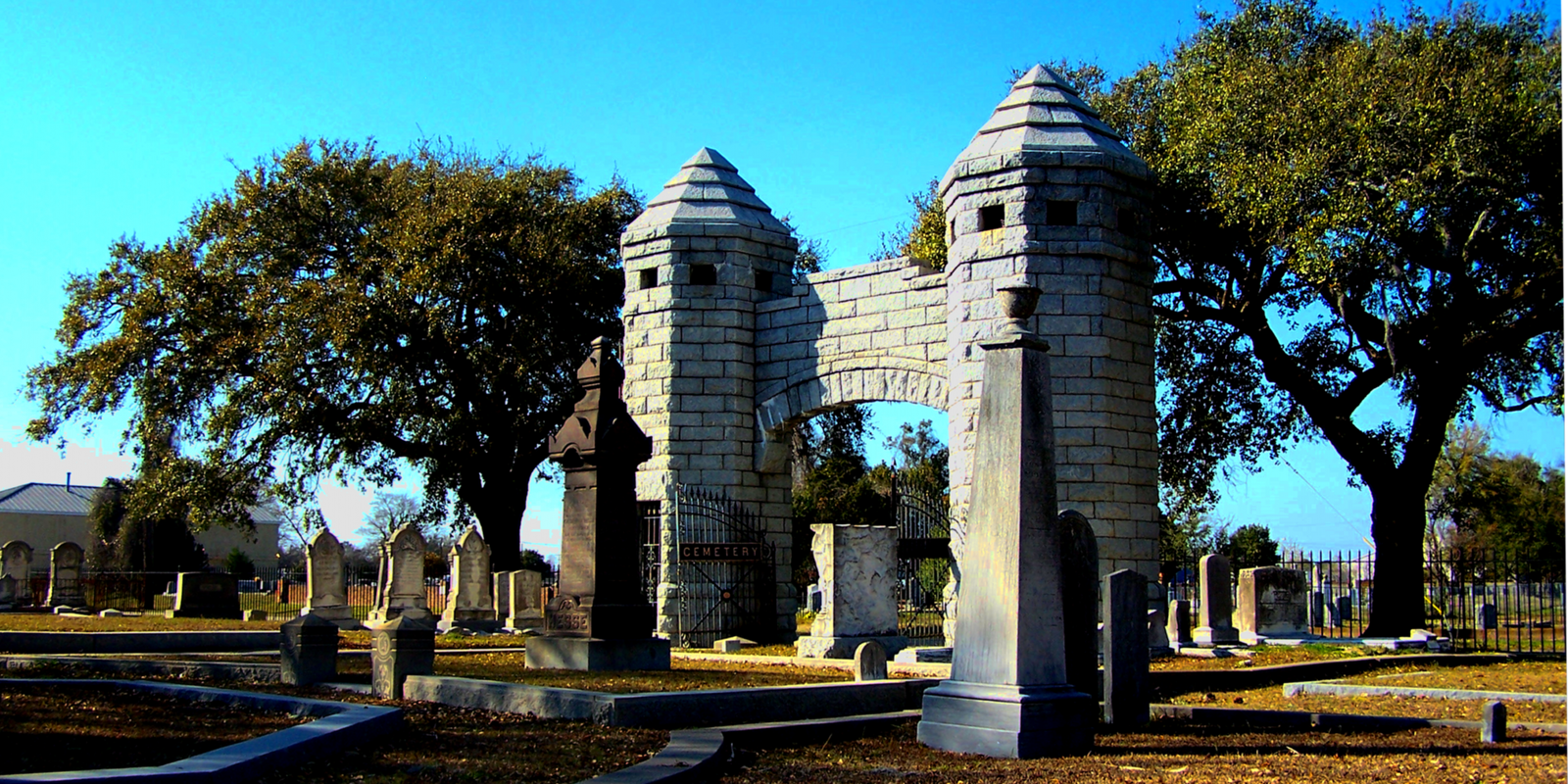
Magnolia Cemetery.
Yes, I realize I tagged this post with the label 'Graveyard' when it's actually a cemetery.
And yes, I do know the difference.
I maintain that the existence of a church is debatable, and I didn't see any compelling reason to create a separate label.
Get over it.
I stopped on my way home from work to take some photos in the nearby Magnolia Cemetery


But here be the pictures, in any case.
The Bethany and St. Lawrence Cemeteries adjoin Magnolia, and I couldn't help wandering into those also so the photos are really from all three.
at the Mepkin Abbey garden




Yes, you read that correctly. I said "whorehouse Madame". The history of the so-called "holy city" of Charleston is not without its share of unholiness. People are still people, regardless of the decade or century. Were it not true, you wouldn't likely be here to read this.
But I'm getting off-track... My train-of thought is de-railing.
There are entire books written about the subject, if that sort of thing interests you.

I intend to go back sometime when neither of my legs are broken, so I can walk around more and get some better photos.

Sunday, February 17, 20137:16 PM
The ferryman doesn't choose the destination, he just rows the boat.
But we know where he's taking us.
 |
| Cartoon Copyright © Erin Bonsteel. Used With Permission. http://www.antiantiunderground.com |
The median household income has dropped by $4,250 since Obama took Office. Thats about an average month's pay.
2.6 million more people are living below the poverty line than in 2008.
In 2008, 28.2 million people were on food stamps at a taxpayer cost of 37.6 Billion dollars. In 2012, working Americans were charged over twice that amount, 78.4 million dollars to provide foos stamps for 46.6 million people.
Sunday, January 13, 201310:47 AM
Slow down. Rest awhile. Talk. Listen. Connect
We're in such a hurry most of the time we never get much chance to talk. The result is a kind of endless day-to-day shallowness, a monotony that leaves a person wondering years later where all the time went and sorry that it's all gone.

Saturday, January 5, 20134:47 PM
People are strange
Some paisley-clad, patchouli/sweat/
Friday, December 28, 20129:54 AM
Stupid little feathered flying reptiles
When I stepped out onto the back patio, I wasn't expecting to be smacked in the face by a bird.
Life is full of surprises. The bird probably didn't expect his flight path would be interrupted by a big fat stupid human head.
Friday, October 5, 201211:10 AM
Old Sheldon Church Ruins
 |
| Old Sheldon Church Ruins |
Originally known as Prince William's Parish Church, it was built sometime between 1745 and 1753. It was built in the Greek-Revival style, unlike the English-Bond style of Biggin Church
The graveyard however, is still in use today. , featured in another post on this blog.
The building was burned in 1779 by British troops in the revolutionary war, and rebuilt in 1826.
It was destroyed again in 1865 by William Tecumseh Sherman. One report from the time suggests they merely tore the inside of the church apart during the "March to the Sea" campaign, leaving it vandalized but repairable. The most common story (and the one told on the stone tablet at the site) is that Sherman's troops burned the building, as they had burnt nearly every structure they passed during that campaign.
In either case, the building was never repaired again. It was further gutted by the locals, as any usable materials remaining inside the church were scavenged for use in rebuilding their homes.
The Old Sheldon Church is listed in the National Register
Tuesday, June 12, 20121:11 PM
That was unexpected
People can tell you so much about themselves when they think they're talking about you.
Now, I already know that I'm socially retarded. Just plumb enstupidated about people in general. Even when conversing in person, I will usually miss the subtle clues that other folks seem to pick up on instinctively. Body-language, facial expressions, tones of voice, etc... All that stuff usually just whizzes right over my big fat stupid head. Over the internet it's even worse than in person.
Monday, May 21, 20127:20 PM
Bird Watching
I enjoy watching the birds that come down to sample the seeds from our feeder. Each type has its own personality. Their interactions are curious and intriguing.
The occasional painted-bunting shows up. These guys are so colorful that I'm not even sure if they're real, or some animated Disney cartoon version of a bird
Finches and titmice are timid. The black crowbirds are individually cowardly, but they invariably arrive en masse, using the 'strength in numbers' principle like an urban street-gang with a hive-mind. Bluejays are bullies.
Saturday, May 5, 20129:24 PM
More local wildlife
Gator at work the other night. Crawled right up from a nearby pond, and laid himself down on the pavement by the doors. Guys trying to chase him away were pretty hilarious to watch.
Two guys. Each standing ~10 meters from the gator. Scratching their heads, not wanting to get closer.
One guy grabs some orange traffic-cones. The smallish rubbery kind, used to signal minor hazards or to reserve parking stalls. I guess the idea was "If I throw things at it, it'll leave".
Tuesday, April 24, 201212:48 AM
You need to be more specific
When the girl at the grocery store said "Strip down, facing me.", how was I supposed to know she was telling me how to swipe my credit card?
Sunday, March 25, 20122:22 PM
Biggin Church Ruins
 |
| Biggin graveyard & church ruins |
The church was destroyed by a forest fire in 1755, but was replaced with a new building in 1761.
British troops used the church as an ammunition depot during the revolutionary war, until they were forced to retreat in 1781. As they retreated they set fire to the church, once again destroying the building along with their abandoned ammunition.
The church was promptly rebuilt, and although the role of parish church had shifted to the nearby Strawberry Chapel
Then things got weird. , Biggin Church remained in use until the war between the states.
 |
| Stitched composite image of the ruins |
Sunday, October 16, 20117:44 PM

Sunday, May 1, 20118:28 PM
Local wildlife
It's not much of a lake, really. More of a wide spot in Goose Creek, the waterway for which the city is named.
 | |
| Crowfield Lake |
People were standing off the shore with fishing poles, in the water up to mid-thigh. A couple of
in a lake full of gators

(or at all, for that matter)
Now I know that gators aren't typically aggressive or hostile, and they prefer to stay away from people if given the chance. And I also know that when someone gets bit, it's usually because they stumbled into a nest or stepped on a gator, or otherwise pissed one off. I realize that gators are entirely different animals from crocodiles, and have a wholly different demeanor.
But I'm still not getting in the water with these guys. Nope. Not me. Water's their house, not mine.
Plus, I also know that the males can sometimes get downright ornery as we get closer to mating season.
"Civilization ends at the waterline. Beyond that, we all enter the food chain, and not always right at the top."
-- Hunter S. Thompson
Saturday, April 30, 20115:02 PM
Strawberry Chapel
In 1748, a seven year old girl named Catherine Chicken was tied to a headstone in the chapel graveyard by the town schoolmaster, and left there overnight.
 |
| Strawberry Chapel. |
At the time, the local parish church was Biggin Church,
The graveyard however, is still in use today. the ruins of which lie about 10 miles to the North, past Mepkin Abbey
There are many stories surrounding the chapel, most of them wildly exaggerated or entirely fabricated. Superstitious folks consider it to be one of the Charleston area's haunted attractions. At least one of the stories appears to be true, and that is the story of Catherine Chicken.
Naturally, countless variations of Miss Chicken's story exist, some more embellished than others. But the most common and more verifiable elements follow.
It is a rather long story, but read on... It's worth it.
Catherine Chicken was the granddaughter of James Child, who founded the town of Childsbury in 1707. Her father, George Chicken, was a member of the Goose Creek militia who was involved in driving the Yemassee Indians out of the state.
Catherine was sent to boarding school in Childsbury, and placed in the care of the harsh and extremely strict schoolmaster and his wife, Monsieur and Madame Dutarque.
One day Catherine lost track of time while playing outside, and as a result, she returned late without having completed the chores or punishments she had been given earlier.
A neighbor heard her cries and initially mistook the sound for an owl, but he soon began to think it sounded like Catherine. He went to the Dutarque's home to check on her, but was told that Catherine was staying with her aunt.
Sensing that something wasn't right, he saddled up his horse and rode to the aunt's home only to learn that Catherine was not there. He alerted the townsfolk that the girl was missing, and a search ensued.
A young slave boy by the name of Mooney was prowling about in the area. Mooney was prone to sneaking out at night for jaunts through the forest and swamp. He he carried with him a long tree branch, and he had fastened a gourd to the end of it. The gourd had been carved with the image of a face, and he would place a lighted candle inside. He carried the branch with the lighted gourd held high, giving the illusion of a ghostly demonic glowing face floating through the woods at night.
Mooney may very well have been frightened by the sounds of moaning coming from the graveyard, but seven-year-old little Catherine, tied to a tombstone in a graveyard at night, was likely much more frightened by that glowing floating face approaching her.
He found her quite by accident, but was afraid to call attention to her thinking he might be beaten for being out after curfew. He was unable to untie her, but stayed with her until he heard the delirious girl cry out the schoolmaster's name and ask why he had left her there. Mooney worried that the word of a slave would never be taken over that of the respected schoolmaster but ran to the local town doctor anyway, to report what he had found.
Catherine was not expected to live. She was struck mute, and her face was drooped with palsy. She was bedridden for days, and though she thrashed about in the throes of obvious nightmares, she didn't speak or utter a sound.
She survived, and eventually she mostly recovered but was disfigured for the remainder of her life.
The schoolmaster was stripped to his undergarments, tied in a rear-facing position to the back of a donkey, and ceremoniously drummed through the center of town by the militia's drummer-boys as the residents pelted him with rocks, fruit, and eggs as he passed through town. Still tied to the mule, he was placed aboard a ferry to cross the river, where the mule was struck with a whip. The mule bolted into the woods, still carrying the backward-facing, nearly-naked Monsieur Dutarque on its back.
The town of Childsbury was wiped out by a malaria epidemic in the 1750s, and no longer exists. Only the vandalized ruins of the chapel and accompanying graveyard remain.
Monday, April 25, 20112:35 AM
Mepkin Abbey
 |
| Graves in the garden terrace |
Neatly tucked away between the Western edge of the Francis Marion National Forest and the Eastern banks of the
at the Mepkin Abbey garden
In accordance with the Rule of St. Benedict, they devote their lives to prayer, spiritual study, work and hospitality
 |
| Stairway to somewhere |
Mepkin Abbey
The graveyard however, is still in use today. to the North and the abandoned remains of Strawberry Chapel
Then things got weird. to the South, where town of Childsbury once stood.
The property was known as Mepkin Plantation when Henry Laurens bought it in 1762. A few generations later, his family sold the land, and after passing through the hands of several different owners it was eventually puchased in 1936 by the well-known magazine publisher Henry Luce (Famous for Time, Fortune, Life, and Sports Illiustrated, among others).
 |
| Pond near the garden terrace |
Luce's wife (Claire Boothe Luce) commissioned an extensive landscaping project to build what became known as 'Mepkin Garden'.
The garden and a large area of adjoining land were donated by the Luce family in 1949 to the Trappist Order's Gethsemani Abbey.
At the highest point on the eastern edge of the garden terrace, there are a few burial plots with the graves of the Luce family.
A (much older) small walled graveyard is also located nearby on the grounds of the monastery, with the graves of the Laurens' family .
 |
| I got photobombed by an insect. I thought it was a mosquito, but I'm told it's a crane-fly. |
In the photo of the Luce graves at the top of this post, a wedding party can be seen in the distance. The gardens at Mepkin are a popular place for weddings, especially during the Spring and Summer months.
I don't care what anybody says, Springtime in South Carolina is just the prettiest dang thing you ever saw. And the gardens are so close to the river that summer isn't usually oppressively hot here. I did my best to not disturb the wedding party while I wandered around taking photographs.
 |
| A blue flutterbee. "Red-Spotted Purple", supposedly, but that sounds like a made-up name. |
The monks at Mepkin grow rice and oyster mushrooms, which are available for sale at their gift shop and a few local grocery markets.
They trade food and supplies with other Abbeys, so many items from other locations are available in their gift shop.
The Mango-Pepper Jelly from an Abbey in Virginia is delicious.
They also raise chickens and they once sold eggs locally, but after the idiotic terrorists at PETA launched a protest against them for keeping chickens, they stopped selling the eggs.
Below is an interactive flash mini-panorama that I made by taking dozens of photographs in the garden, and then stitching them together. You can click and drag the mouse on it to scroll 360-degrees left or right, or you can use the arrow keys. Shift and Ctrl will zoom in/out (the mouse wheel does the same, but this may not work depending on your browser and configuration). Be warned though: Going too fast may induce vertigo.
Saturday, April 23, 201110:55 AM
Magnolia Plantation
 |
| The plantation home |
The core of the current house was built near Summerville, SC before the Revolutionary war, and floated down the Ashley River after the War between the States.
The plantation was owned by another Thomas Drayton (the great-grandson of the Thomas Drayton who bought the land) until his death in 1825 when, having no sons of his own list as heirs in his will, he bequeathed the land to the sons of his daughter Sarah.
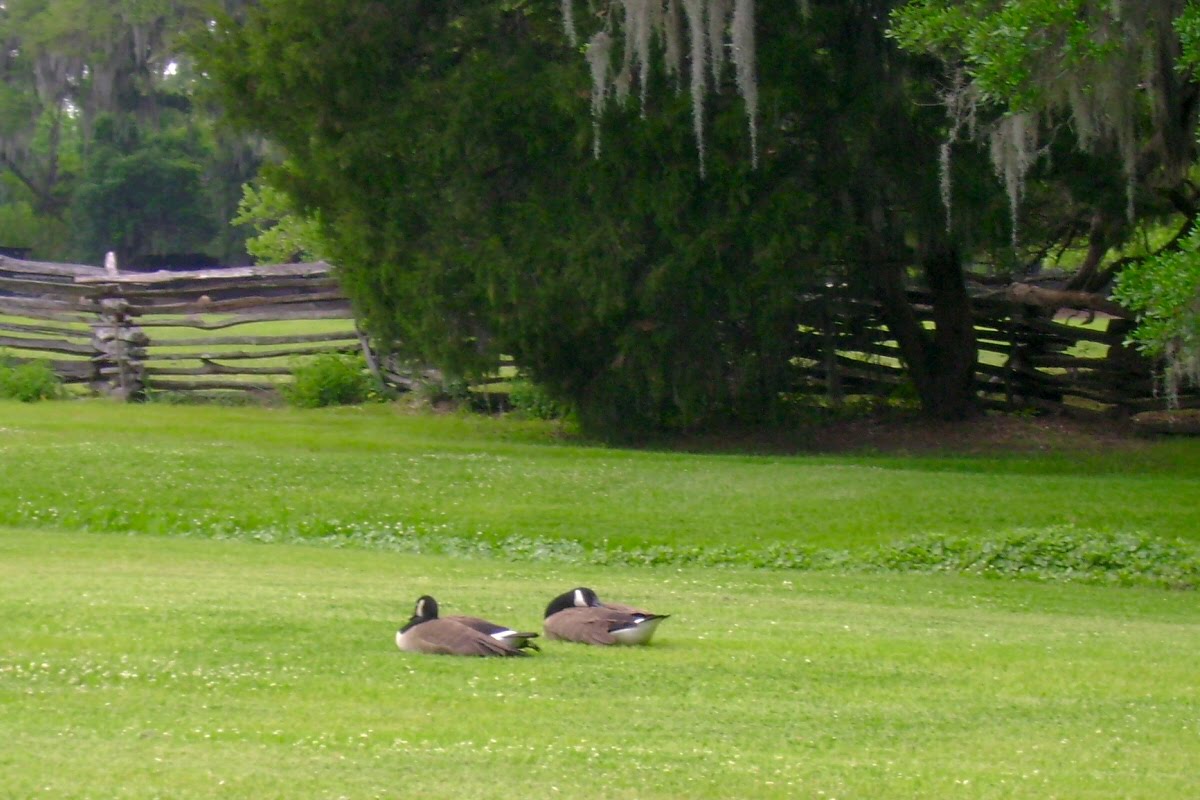 |
| A beautiful day to relax in the grass |
John Grimké-Drayton later became the sole owner while studying for the ministry in England, after learning that his brother Thomas had died of a gunshot wound on the steps of the plantation home.
In 1838 Grimké-Drayton attended Episcopal seminary in Philadelphia, where he met and married Julia Ewing.
 |
| Showing off his plumage |
Believing the outside air would do him some good, he spent much of his time outdoors extensively reworking the gardens in an English style.
He intended to create a series of romantic gardens to make his bride Julia feel more at home in the lowcountry, and reportedly confided to a fellow minister in Philadelphia of his desire "...to create an earthly paradise in which my dear Julia may forever forget Philadelphia and her desire to return there."
 |
| What's this guy doing here? |
After Union troops burned the house in the War between the States, Grimké-Drayton opened the gardens to the public in 1870 as a tourist attraction to make money. The gardens at "Magnolia-on-the-Ashley" (as it came to be known) were the first privately owned gardens to be opened to the public.
Magnolia Plantation is listed in the National Register
Tuesday, April 12, 20111:07 PM
Roaming around...
 |
 |
| Pipes have been driven into the rock |
The water from the artesian spring is clean and pure, and many of the locals come here regularly to fill jugs. They say it tastes better than the city's tap water. Not having tasted the city's tap-water, I'm unqualified to give a personal comparison, but I can attest that the spring water does taste pretty good.
The history is rather vague and much of it is apocryphal, but the story behind the spring dates back to the Revolutionary War.
 |
| Runoff from the spring |
Military records from the time show that the soldiers returned to Charleston a few weeks later, with all injuries miraculously healed.
 |
| It's called a Black Swallowtail, I'm told. And it's male. I thought it was called a flutterbee. |
The story spread that the water had therapeutic properties or even mystical healing powers which had allowed the wounded troops to regain their health after drinking and bathing in it.
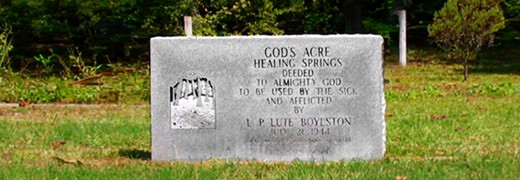
The Edisto Indians reportedly sold the land for a bag of corn, and the Healing Springs Baptist Church was built next door.
The church made the decision to forgo digging a traditional graveyard on the land, in order to keep the springs intact and undisturbed.
God's Acre is listed in the National Register